
Post not found
We couldn't find an article matching that link. Browse all insights instead.
View All InsightsWhy Inventory Accuracy Is a Revenue Issue, Not an Operations Issue
Inaccurate stock data doesn't just create warehouse headaches — it cancels orders, wastes ad spend, and quietly suppresses revenue you're already paying to generate.
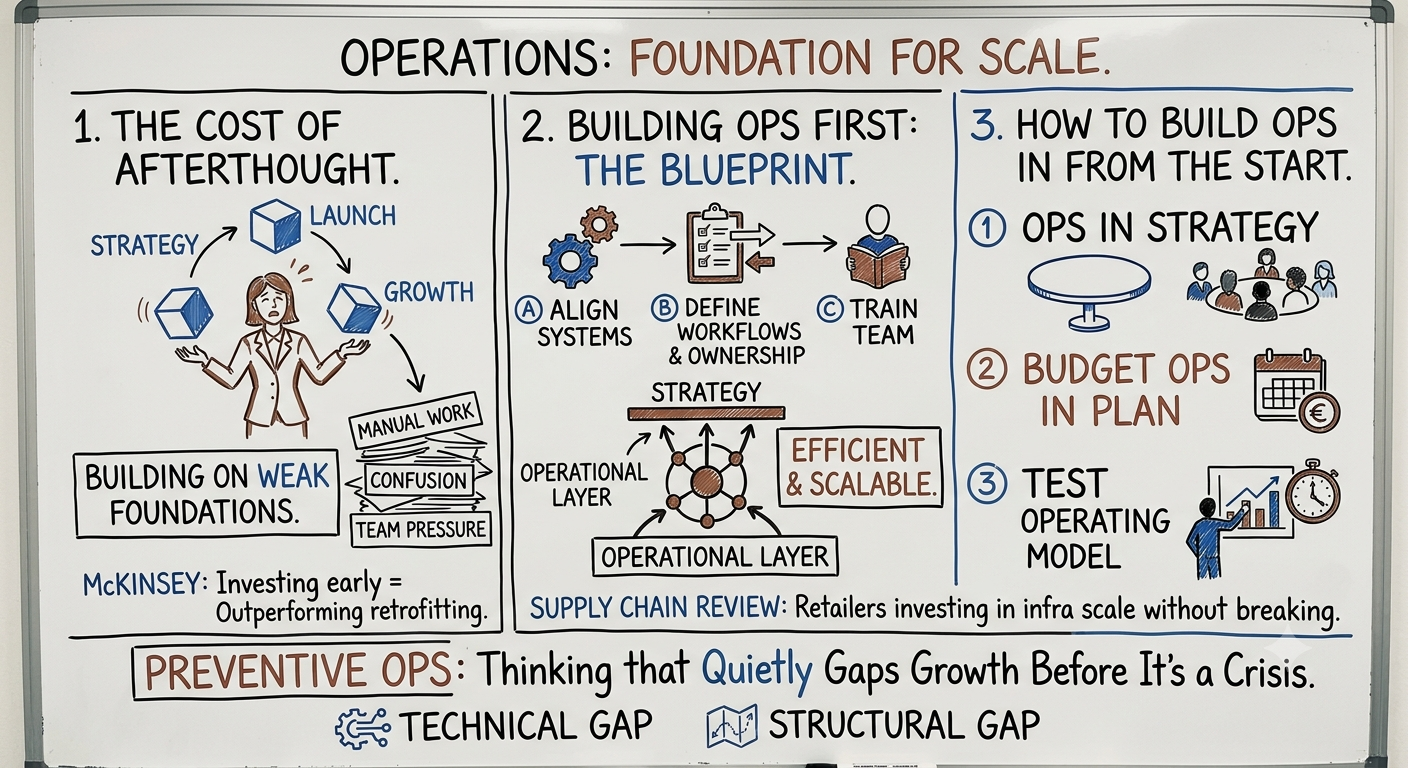
When inventory data is wrong, the damage is rarely confined to the warehouse. It shows up in cancelled orders, overselling, wasted ad spend, and customers abandoning purchases because the product they wanted is no longer available. For many retailers, inventory accuracy is treated as an operational detail. In reality, it is a commercial issue. If your stock data is not accurate, your team is making decisions on incomplete information, and your customer experience is taking the hit. The problem compounds as you scale A single system might be manageable for a small operation, but once stock is spread across stores, online channels, and marketplaces, the gaps start to multiply. Every delay in updating stock levels increases the chance of selling something that is no longer available. That creates friction at every stage of the customer journey. The customer clicks, adds to basket, checks out, and then finds out the product is unavailable. The sale is lost, and trust is weakened. RELEX Solutions estimates that inventory inaccuracy costs retailers roughly $400 billion globally each year — a scale that makes clear this is a commercial problem long before it is a warehouse one. Marketing can't fix broken availability The commercial impact is often bigger than people expect. Marketing can drive traffic, but it cannot fix broken availability. If the site is promoting products that are not actually in stock, every pound spent on acquisition becomes less efficient. Cancelled orders and refunds that erode margin on top of the original acquisition cost.Wasted ad spend sending traffic to products that can't actually be fulfilled.Weakened customer trust that suppresses repeat purchase rate long after the original order. A single source of truth changes the equation The solution is not just better reporting. It is a single, reliable source of truth for inventory across the business. IBM's research on inventory visibility points to the same conclusion: when teams can trust the data, they make better decisions, reduce cancellations, and convert more of the demand they are already creating. We saw this directly while rebuilding merchandising and real-time inventory visibility for a DTC fragrance and beauty retailer managing stock across five storefronts — the fix was never a better dashboard, it was making the underlying data trustworthy enough to act on. If inventory accuracy is not measurable in real time, it is already costing you money. The question is whether you are seeing the cost in a spreadsheet, or in the customer experience. What to check this week Can you see, right now, exactly how much of your best-selling SKU is available across every channel combined?How many orders were cancelled last month specifically because of a stock discrepancy, not a customer changing their mind?Is there one team, or one system, accountable for inventory accuracy — or does the answer depend on who you ask? If you can't answer all three confidently, the gap is already showing up in your conversion rate whether you're tracking it or not. This is the kind of foundational work we cover under operational excellence — closing the operational gaps that quietly cap growth before they show up as a revenue problem.