
Post not found
We couldn't find an article matching that link. Browse all insights instead.
View All InsightsWhat Multi-Channel Retailers Get Wrong About Fulfilment
Multi-channel retail looks simple from the outside. The complexity — and the cost — comes from treating each channel as if it can be managed independently.
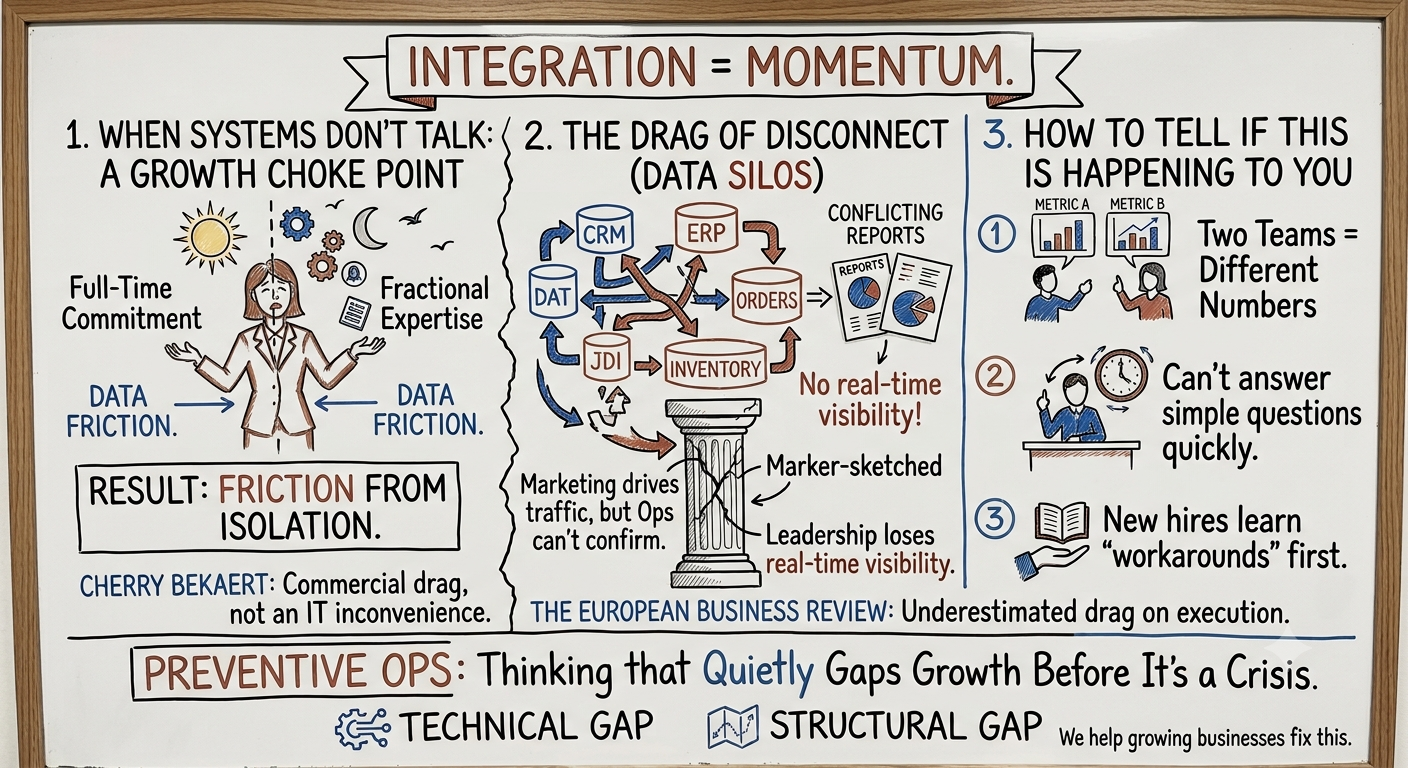
Multi-channel retail looks simple from the outside. Sell in-store, sell online, sell on marketplaces, and keep everything moving. In reality, the complexity comes from trying to make separate systems behave like one business. Every channel affects every other channel The biggest mistake retailers make is assuming each sales channel can be managed independently. In practice, every channel affects the others. A sale in one place changes stock availability everywhere else, and if those systems are not connected properly, the business starts selling stock it does not have. Supply Chain Management Review's research on omnichannel retail identifies inventory intelligence as a core capability precisely because of this — not a nice-to-have layered on top. That is where fulfilment starts to break down. Customers place orders based on outdated information. Teams spend time correcting errors manually. Support volumes increase. And the business ends up losing margin on problems it should never have created. Fulfilment is a systems problem, not just a logistics one Another common mistake is treating fulfilment as a logistics issue only. It is not just about getting products out the door. It is about making sure the entire data and systems layer can support the promise the business is making to customers. Inconsistent customer experience — some orders smooth, others delayed or cancelled entirely.Support teams absorbing the cost of problems that originated in disconnected systems, not in delivery.Margin erosion from corrections, refunds, and manual workarounds that should never have been needed. When fulfilment is fragmented, the customer experience becomes unpredictable, and that unpredictability hurts trust and makes growth harder. RELEX Solutions' analysis of the inventory accuracy problem reaches the same conclusion from the data side: the retailers losing the most are rarely the ones with a single bad channel — they're the ones with channels that don't talk to each other. The fix is usually not more pressure on the team. It is better structure. We saw this directly rebuilding carrier operations and service structure for a fast-growth fashion retailer scaling across channels faster than its systems could absorb. Retailers need a connected view of inventory, clearer operational ownership, and systems that work together rather than against each other. The more channels a retailer adds, the more important that foundation becomes. Where to start fixing it Map every place the same SKU is sold, and confirm stock updates propagate across all of them in real time, not on a batch delay.Give one team clear, end-to-end ownership of fulfilment data accuracy — not a shared responsibility split across channel teams.Treat every new channel launch as a systems decision first, and a merchandising decision second. Retailers who get this right treat every new channel as an integration problem to solve up front, not a growth win to celebrate and fix later. This is the foundation of our operational excellence work with multi-channel retailers.