
Post not found
We couldn't find an article matching that link. Browse all insights instead.
View All InsightsThe Hidden Cost of Manual Reconciliation
Manual reconciliation looks harmless until you add up the real cost — in lost time, compounding delay, and a team that stays reactive instead of strategic.
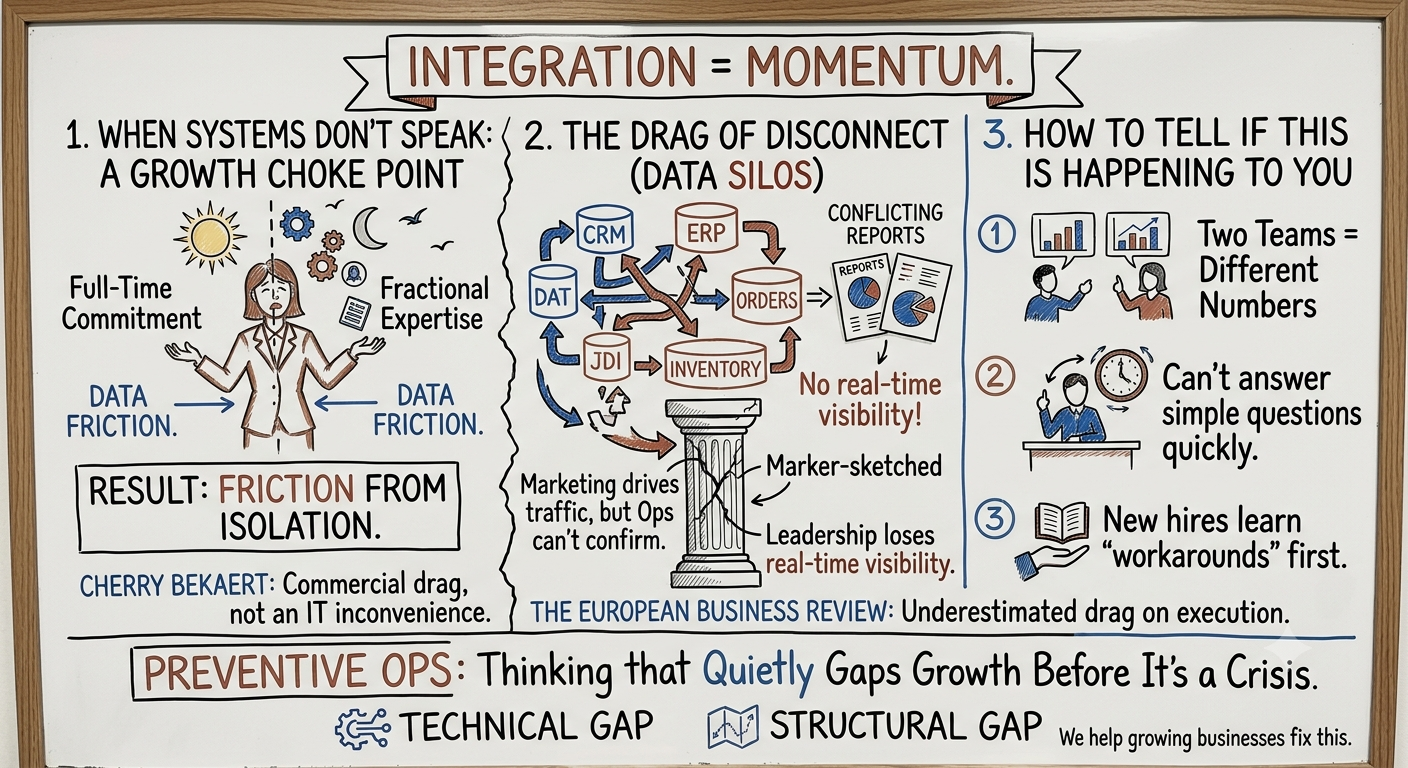
Manual reconciliation is one of those processes that looks harmless until you add up the real cost. A few minutes here, an hour there, and suddenly the team is spending a meaningful amount of time fixing data that should already be aligned. Industry research puts the figure at around 44 hours a week lost to manual finance and reconciliation processes in a typical mid-sized team — more than a full extra head count doing nothing but correcting data. Delay creates risk The problem is not just time. Manual reconciliation introduces delay, and delay creates risk. By the time stock has been checked and corrected, the underlying data may already be out of date again. That means more opportunity for overselling, more chance of cancellation, and more stress on the people managing the process. It also means the business is relying on humans to close gaps that should have been eliminated by systems. Why it gets worse, not better, as you grow More orders mean more transactions that can fall out of sync between systems.More channels mean more places for the same SKU to disagree with itself.More SKUs mean more surface area for small errors to compound into large ones. As the business grows, manual reconciliation becomes harder to sustain. What started as a workaround turns into a bottleneck. Xceptor's research on manual vs automated reconciliation makes the same case from the enterprise finance side: the cost of manual matching scales with volume, while automated reconciliation doesn't. The hidden cost is also cultural. Teams that spend too much time cleaning up data spend less time improving the business. They stay reactive instead of strategic. The answer is not to work harder. It is to reduce the need for manual intervention in the first place. We rebuilt exactly this kind of automated operating system for a scale-up consumer brand drowning in manual cross-checking — when systems are connected properly, the business can spend less time checking what happened and more time making better decisions. Signs it's time to automate Reconciliation is done at the same time every day regardless of order volume — a sign the process, not the workload, is the bottleneck.The same errors get corrected repeatedly rather than fixed at the source.New hires are trained specifically to manage a workaround, rather than a system. Each of these is a signal that automation will pay for itself quickly. It's the exact problem our AI & automation work is built to solve — removing the manual bottleneck rather than adding more headcount to manage it.